If understanding your trauma were enough, you’d be healed by now.
You can explain why you fawn, why you freeze, why a key in the door still sets you off. Your body does it anyway. Why insight never makes it past your neck, and the bottom-up journal built for the part of you it can’t reach.

I could explain every reaction I had. I still had every one of them.
If you’re years into the work and your body hasn’t caught up, keep reading.
I spent five years doing everything I was supposed to do.
Every Thursday at four, I sat on the same gray couch. I read the books until the spines cracked and listened to the podcasts on the drive home. I rehearsed boundaries in the shower. I could trace my people-pleasing back to a specific kitchen and a specific tone of voice, and I could explain my attachment style to a stranger in under a minute.
I knew all the words. Fawn. Freeze. Hypervigilance. Emotional neglect.
And still, a door would slam down the hall and my whole body would go tight. Someone would sigh in the next room and I’d already be running through what I’d done wrong. A voice got a little louder and I was nine again, reading the room before anyone said a word.
I was thirty-four, and I still braced for a scream that never came.
Knowing why I flinched had never once stopped me from flinching.
The night I gave up on understanding it
The worst part was how hard I was trying.
I had two journals at home with the first nine pages filled in. One night I decided to do it properly and wrote out my whole childhood in one sitting. Four hours. I woke up the next morning foggy and wrung out, like I’d been hit by something, and I didn’t open that notebook again for months.
That Thursday, the sentence I’d been swallowing for a year came out: “I understand all of it. So why do I still feel exactly the same?”
My therapist didn’t answer right away. Then she said, “Maybe the part of you that needs to hear it isn’t the part that’s been listening.”
I nodded like that made sense. Afterward I sat in my car with the engine off for twenty minutes. I had followed every instruction anyone had ever given me, and I was more tired than when I started.
Then my cousin sat down next to me
A few weeks later, at my niece’s birthday party, my cousin Leah sat down next to me on the couch.
For years, at every family thing, she’d spent the whole party in the kitchen doing dishes so nobody could talk to her. I knew that move. I practically invented that move.
This time she was just sitting there with her shoulders down, laughing at something across the room, not checking who was watching her laugh.
“Okay,” I said. “What changed?”
She shrugged. “I’ve been doing this journal.”
I almost laughed. I told her about my two journals with nine pages each, and the four-hour night.
“Not that kind,” she said.
She opened it to page one
She had it in her bag: a plain linen hardcover with gold lettering on the front.
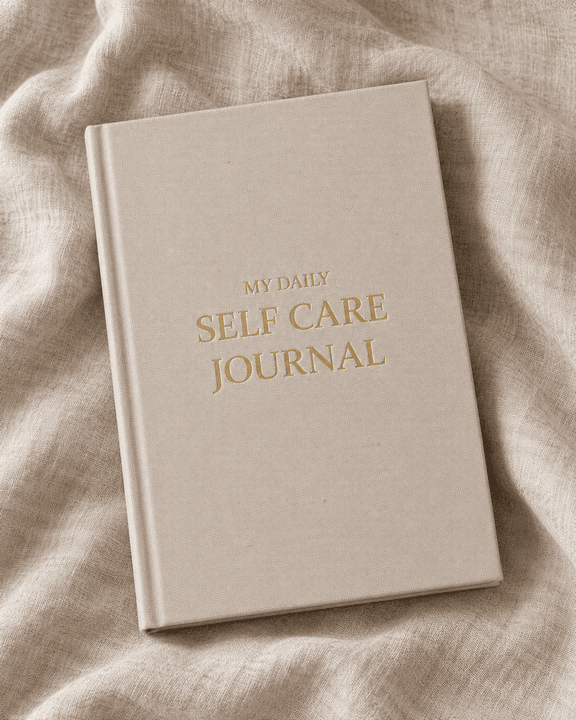
“What do you need today that you’re afraid to admit?”
That was the whole page. Nothing about my childhood, no gratitude list. Just that question and, under it in her handwriting, five words: rest. without earning it first.
“Some days that’s all I write,” she said. “It counts.”
She flipped further in. On page 156 she’d written about her sister. On page 272 she’d written “I don’t know yet,” and the page had let that be an answer.
“It starts small on purpose,” she said. “Page one is built for the version of you that’s barely holding it together. It only goes deeper once you can actually hold it.”

Why none of it had reached me
After the party I went looking for what she meant, and I kept running into two words: top-down and bottom-up. Here’s what nobody had explained in five years of sessions.
Insight lives in the part of you that thinks in words.
Your flinch doesn’t.
The bracing, the freeze, the automatic “sorry,” the 3 a.m. replay of a conversation that went fine: none of that runs on thoughts. It runs on your nervous system. And your nervous system learned what “safe” meant long before you had language for any of it.
It doesn’t take notes. It doesn’t read the books. It doesn’t care how well you understand your childhood.
That’s why I could say, and mean, “I know I’m safe now,” and feel my stomach drop anyway.
Your mind has the explanation.
Your body has never had the experience.
Call it the Insight Gap: the distance between what you know and what your body still believes. For women who grew up managing everyone else’s moods, it can stay wide open for decades, through good therapy, good books and good intentions.
Not because you’re broken. Because almost every tool you’ve been handed works top-down. It starts with your thinking brain and hopes your body will follow.
For a lot of us, the body never does.
I made a list of everything I’d tried. Every one of them had asked me for something I didn’t have.
- Therapy
- asked me to explain it.
- Books
- asked me to understand it.
- Meditation
- asked me to sit still with it, when stillness was exactly when the alarm got loudest.I once took a day off at the beach and realized I physically could not relax. I wasn’t being ungrateful. My body just didn’t trust calm yet.
- EMDR and somatic work
- went to the body, and they help a lot of people. But they meant waiting for an appointment, and the alarm doesn’t keep office hours.
- A blank journal
- asked me to dig it all up, alone, at night, with nothing to tell me when to stop.
Most of it asked for depth first and hoped my capacity would catch up. The things that did start with the body only got me for an hour a week.
And when none of it stuck, I blamed myself. I called it laziness, or resistance, or being “bad at healing.”
I wasn’t lazy. I had a nervous system that had been on duty since I was small, and nobody had ever told it the shift was over.
It starts at the bottom
Leah’s journal did one thing differently. Page one doesn’t ask about your past. It asks what you need today. Then it climbs toward the bigger questions one small rung at a time, and only as fast as your capacity to hold them grows.
They call it the Capacity Ladder. Here’s what the climb looks like.
- Page 1: “What do you need today that you’re afraid to admit?”
- Page 21: “Who do you perform for most? Why?”
- Page 42: “Which relationship feels like you’re always auditioning?”
- Page 156: “Where in your body do you feel drained after certain people?”
- Page 272: “What part of your past are you ready to stop explaining?”
After five years of therapy, page one looked almost too simple. Then I tried to answer it. I could explain my childhood in detail. What I’d almost never done was admit what I needed, even to a page, and find out that nothing bad happened.
My first question was the obvious one: isn’t a journal just more words? On the early pages, barely. The answers are tiny: “rest,” “space,” “I don’t know.” You write one true thing about right now, close the cover and go to bed. For a body that learned paying attention to itself wasn’t safe, that’s new.
So I tried it
Before I left the party, I’d ordered one on my phone.
Page one, the first night: “to cancel Saturday without explaining why.” It took about a minute, and I closed the cover feeling oddly light, like I’d gotten away with something.
My mom used to read my diary, so at first I wrote in shorthand. A word only I could decode still counted. Some nights I wrote “nothing.” Some nights “numb.” That counted too, and the early pages never asked me to push past it.
Every page asked something new, and a little more than the one before. What repeated was the noticing. Around page 40 it asked which relationship felt like I was always auditioning, and I filled the page. By the time it asked about my past, I’d spent months noticing what I felt and staying with it, and I could write about it without losing the next day.
I’m the one my family calls. The first week, writing about myself felt almost rude. By the second, I’d stopped apologizing to the page. It turns out you can love people and still need a page that isn’t about them.
Then I missed two weeks in March, the worst two weeks of my year. There are no dates in Mightli, no streak, nothing to catch up on. The page just waited. Page 41 was whenever I got to it.
It was quieter than I expected
Nobody cries on page 63 and wakes up a different person. I didn’t. It happened in steps so small I kept mistaking them for no progress.
- Around week 5A door slammed downstairs, and my body checked, then settled. On its own.
- Week 9I caught the freeze while it was happening, not three days later in the shower.
- Week 11I realized it had been almost a month since my last panic spiral.
- Week 16I woke up one morning and my jaw wasn’t clenched.
And at some point I noticed I hadn’t asked what was wrong with me in a while. Five years of Thursdays hadn’t gotten me there on their own.
How the Mightli Journal works
It’s 365 prompts in a plain linen hardcover, built bottom-up. There’s no date on any page and no streak to keep. You get one small question at a time, and the book waits for you.

- Open to your next page.
- Read one question.
- Answer with a word, a sentence, or “I don’t know.”
- Close it. Come back whenever.
One word counts. So does a sentence, or “I don’t know,” which on some pages will be the most honest thing you write all week. Skip any page, stop anytime, and bring anything heavy to your therapist. You’ve spent your whole life performing for other people, and this is the one place you don’t have to.
Keep your therapist. This is for the other 167 hours.
And yes, I still see mine every Thursday. I’d never tell you to quit yours. Mightli isn’t a replacement for therapy. It’s what you do with the rest of your week. No therapist right now? Then it’s for all 168.
I used to get triggered on a Tuesday night, and by Thursday I’d have smoothed it into something I could explain. Now I open a page that same night, while my body still remembers what it felt like. Then I walk into session with something real, instead of spending the first twenty minutes trying to remember why the week was so hard.
Therapy gives your mind the understanding. Mightli gives your body the reps.
Mightli is for you if…
- You can explain every one of your reactions, and you still can’t stop having them.
- You’re “doing better” on paper and still exhausted from being on guard all the time.
- You’re the one everyone leans on, and nobody has asked what you need in a long time. Including you.
- You love the idea of journaling but could never stick with it, or it opened up more than you could hold.
- You’re tired of being told to “just” relax, set boundaries, or practice gratitude.
- You learned to survive early, and you’re tired of it being the only thing you know how to do.
What you get
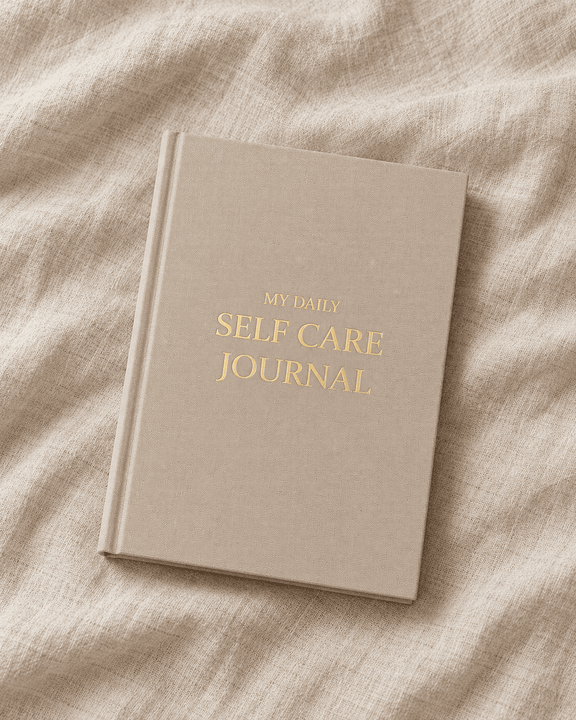
- The Mightli Journal: 365 bottom-up prompts that build capacity before they ask for depth, across ten parts of your life: self-awareness, your past, love, relationships, self-care, happiness, habits, passion, growth and goals.
- Linen hardcover with a sewn binding, built for a year of being opened.
- No dates anywhere. Start in March, put it down for a month, pick up exactly where you left off.
30-day guarantee. Write in it for a month. If you don’t feel a difference, you get a full refund, even if you’ve filled the pages.
Price today: $39.95Usually $54.95Less than a single therapy session.
Why I’d start this week
Because it’s going to happen again this week, probably on a weeknight, probably when you’re tired. It helps to have somewhere to put it.
You figured out how to survive as a kid, mostly on your own. That was the hard part. What’s left is smaller: your body learning, a page at a time, that it can stop keeping watch.
Page one is waiting. It isn’t going to ask you for much.
30-day guarantee. Write in it for a month. If you don’t feel a difference, you get a full refund, even if you’ve filled the pages. I don’t think you’ll need it.